French pronunciation
How to pronounce the French EU /ø/
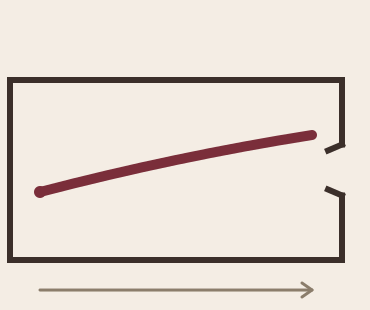
EU, as in peu, deux and bleu, is another vowel English doesn't have. The tongue sits where it would for “é”, and the lips round as they would for “o”. It's soft, short and still: nothing in it moves.
How to make it
Position your tongue the way you would for 'é' (forward and mid-high), but at the same time round your lips like for 'o'. It's a soft, smooth, rounded sound that doesn't exist in English. Try 'peu' (a little). Like the 'u' (tu) sound, the trick is to do two things at once.
- How it's spelled
- eu, œu at the end of a syllable: peu, deux, bleu, vœu. Also before a z sound: heureuse, sérieuse
- The English-speaker trap
- Sliding into an English “uh” or “oo”. Keep the tongue forward and the lips rounded, and don't let the vowel glide.
- If your French is already good
- The giveaway at a high level is the hesitation sound. French speakers hesitate on euh, this vowel held as long as they need, not on um or uh. A fluent speaker who says um mid-sentence sounds English-speaking at once. Also watch jeune /ʒœn/ and jeûne /ʒøn/: open and closed EU still separate words for many Parisians.
Your turn · say it, get scored sound by sound
Il peut venir à deux heures.
Tap to record. Read the phrase out loud.
12 sentences to practise /ø/
Each one uses the sound two to four times in an ordinary sentence. Listen, then press “Say it” to load it into the recorder.
-
Il peut venir à deux heures.
-
Elle veut un peu de beurre.
-
Ce rideau bleu est un peu trop long.
-
Mon fils veut jouer à un nouveau jeu.
-
Il semble très heureux dans son nouveau milieu.
-
S'il pleut demain, je reste chez eux.
-
Mon neveu peut venir avec ses deux amis.
-
On se voit dans deux jours, c'est mieux.
-
Ceux qui habitent en banlieue prennent le train.
-
Elle a coupé ses cheveux un peu court.
-
Ce vieux manteau bleu ne me va plus.
-
Mon amoureux veut partir en voyage cet été.
French names that use it
Brands, dishes, wines and places with this sound in them. Each page gives the IPA, the audio and the recorder:
Beyond the single sound
Guides for speakers past the basics, where this sound comes up:
Questions about the French EU
- Is EU always pronounced the same?
- No. At the end of a syllable it's the closed /ø/ of peu and deux. Before a pronounced consonant it usually opens to /œ/, as in peur, heure and sœur, with the jaw a little lower. Before a z sound it stays closed: heureuse, sérieuse.
- How is EU different from the French U?
- Both round the lips and keep the tongue forward. For U (tu) the tongue is high, as for “ee”; for EU (peu) it's a little lower, as for “é”. Think “ee” → tu, “é” → peu.