French pronunciation
How to pronounce the nasal ON /ɔ̃/
The nasal ON is the vowel in bon, maison and on. It's a rounded “oh” with the air leaving through your nose as well as your mouth, and there's no N after it: the nasal quality is the whole sound.
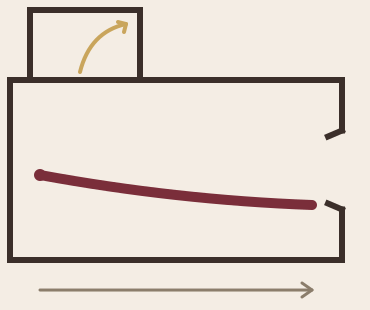
How to make it
Another famous French nasal vowel. Round your lips, pull your tongue back and slightly low, and let air flow out through both your mouth and your nose. Don't pronounce a separate 'n' or 'm' — the nasal quality IS the vowel. Try 'bon' (good). Common mistake: tacking an 'n' sound on the end. There's no 'n' — it's all in the nose.
- How it's spelled
- on, om before a consonant or at the end of a word: bon, nom, ombre, onze. Not before a vowel or a second n/m: bonne, homme, téléphone
- The English-speaker trap
- Finishing on a consonant, so bon comes out as “bonn” or “bong”. Your tongue never touches the roof of your mouth.
- If your French is already good
- At a high level the problem is keeping ON and AN apart at speed, made harder by the way Parisian AN has drifted back and rounded toward it. Keep ON tight and rounded, AN more open. And let the nasal go where French does: in liaison, bon ami is /bɔ.na.mi/, with a plain vowel, while mon ami keeps it: /mɔ̃.na.mi/.
Your turn · say it, get scored sound by sound
Nous avons une bonne raison de continuer.
Tap to record. Read the phrase out loud.
12 sentences to practise /ɔ̃/
Each one uses the sound two to four times in an ordinary sentence. Listen, then press “Say it” to load it into the recorder.
-
Nous avons une bonne raison de continuer.
-
Nous allons à la maison.
-
On dit que la maison date de Napoléon.
-
Ils ont pris l'avion pour les vacances.
-
Nous attendons la réponse du patron.
-
Ton salon est vraiment très mignon.
-
Est-ce qu'on peut ajouter du jambon ?
-
On traverse le pont avec précaution.
-
Mon patron a une opinion très ferme.
-
Ce pantalon est trop long pour moi.
-
On fêtera son départ le mois prochain.
-
Il faut faire attention à la pollution.
Words it changes
Get this sound wrong and you say a different word. Test your ear and your mouth on the pairs:
French names that use it
Brands, dishes, wines and places with this sound in them. Each page gives the IPA, the audio and the recorder:
Beyond the single sound
Guides for speakers past the basics, where this sound comes up:
Questions about the nasal ON
- Do you pronounce the N in “bon”?
- No. Only the vowel is nasal; your tongue never touches the roof of your mouth. The N comes back in liaison before a vowel (bon ami), and in the feminine bonne, where the vowel stops being nasal.
- What's the difference between ON and AN?
- Lip shape. For ON /ɔ̃/ the lips are rounded, as for “oh”. For AN /ɑ̃/ (dans, France) the mouth is open and the lips relaxed, as for “ah”. Both send air through the nose. Mix them up and on (we) turns into an (year).